
Standing on the Word
There is a joke I remember hearing a long time ago. Or perhaps I made it up. I am not sure anymore. Someone was told to stand on the Word, so they took out their Bible and literally stood on it.
The image has stayed with me.
I can understand the longing behind it. Sometimes we want something tangible to help bolster our faith. Something we can do with our bodies when our hearts are struggling to find their footing.
In a difficult season, familiar spiritual expressions can begin to feel like questions. Trust God. Have faith. Stand on the Word. We know the language. But what does it ask of us when we are afraid, when work is uncertain and when the next decision cannot wait until we feel stronger?
I have been sitting with that question.
And I keep returning to this thought: to stand on the Word, I need to have the Word in me.
What I carry into the difficult moments
The psalmist writes:
“Thy word have I hid in mine heart, that I might not sin against thee.”
—Psalm 119:11, KJV
There are situations in which I will need to draw on what I have already received, remembered and carried.
An unexpected conversation. A decision that unsettles me. News that changes the plans I had made. A morning when anxiety begins speaking before I have even got out of bed.
In those moments, I want Scripture to have a place in my response.
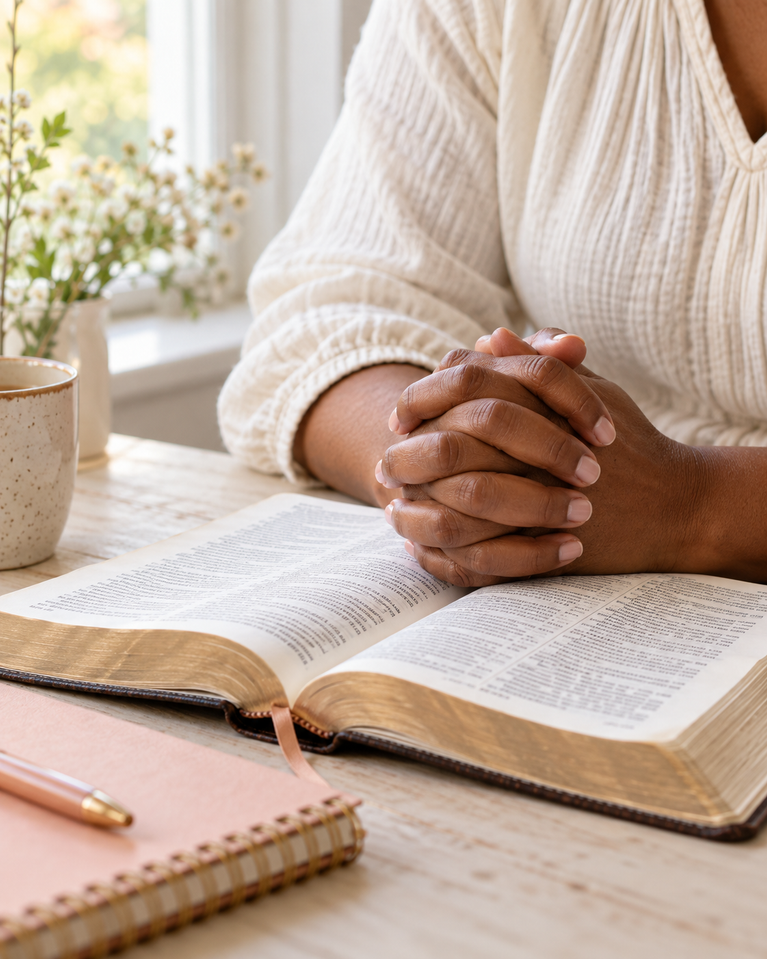
That requires time with it before the difficult moment arrives. Reading slowly enough to consider what a passage means. Returning to it. Praying with it. Allowing it to become familiar beyond the words I can recite.
I have known some verses for years and still found that a particular season revealed how little I had considered what they asked of me.
Knowing the words and learning to live by them can be a long journey.
Light for the next step
Another familiar verse has been speaking to me:
“Thy word is a lamp unto my feet, and a light unto my path.”
—Psalm 119:105, KJV
I would often prefer a view of the whole road.
I want to know how the present uncertainty will resolve. Where the next opportunity will come from. Whether a difficult decision will eventually make sense. How long I will have to carry what feels heavy now.
A lamp at my feet brings my attention closer.
Perhaps there is something I can do faithfully today, even while much of the future remains unclear. A conversation I need to have. Information I need to check. A commitment I need to keep. A decision I should allow more time before making.
For those of us carrying responsibility in business and leadership, this can be difficult. Planning is part of our work. Other people may need answers from us, and uncertainty has practical consequences.
I still need to plan, seek advice and make responsible judgments. But I am learning that I may have enough light to take a step before I have enough information to feel entirely reassured.
That is an uncomfortable place to practise trust.
Allowing the Word to examine me
When I am distressed, I naturally turn to Scripture for comfort. I want reassurance that God sees me, that He is near and that I can bring Him what I am carrying.
I also need to remain open to what Scripture reveals about me.
Hebrews 4:12 describes the Word of God as living and powerful, discerning the thoughts and intentions of the heart. That gives me something to consider when I am preoccupied with what someone else has done.
What is happening in my own heart?
Has disappointment begun shaping the way I speak? Am I calling something wisdom when it is partly fear? Am I seeking God’s guidance while hoping He will simply endorse the decision I have already made?
Those questions can be uncomfortable. They are also necessary.
If I want the Word to guide my life, I have to allow it to reach the parts of me I would rather leave unexamined. My motives belong in prayer alongside my circumstances.
There may be something to confess, a response to reconsider or an apology to make. There may also be a burden I have taken on that requires a more careful understanding of my responsibility.
I need God’s help to recognise those things.
Standing also means walking
I think standing on the Word means allowing what I believe to carry weight in the way I live.
In my work, that includes how I treat someone when I am frustrated. Whether I represent information honestly. How I use authority. Whether I honour a commitment when keeping it has become inconvenient.
Faith takes shape in those choices.
Some days, the faithful response is quiet and ordinary. Preparing properly. Listening without rushing to defend myself. Giving a clear answer. Refusing to pass along something I have not verified.
Other days, it asks more of me. I may need to acknowledge an error, address a concern or accept that I cannot take an opportunity on the terms being offered.
I cannot separate standing on the Word from the way I walk through those situations. I want what I read and pray to shape what I actually do.
I also know there will be days when I fall short. Then I need to return honestly, receive forgiveness and make whatever correction is mine to make.
When all I can find is “Lord, help me”
Having the Word within me does not mean I will always remember the perfect verse.
There are moments when I feel overwhelmed and cannot gather my thoughts into a composed prayer. I may know that I have read something relevant, yet struggle to recall it. Sometimes all I can find is, Lord, help me.
I want to make room for that reality.
Time in Scripture should deepen my relationship with God. I do not want to turn it into another measure by which I decide whether I am coping well enough.
I can come to Him while I am afraid. I can ask for help while I am still confused. I can read a passage slowly, without immediately feeling different, and return to it again tomorrow.
I can also receive support from another person. Someone may remind me of a truth I have temporarily lost sight of, pray when I cannot find the words or help me think through the practical situation in front of me.
I do not have to become spiritually composed before I seek care.
Still in the boat
In my original reflection, I pictured myself sitting in a boat, unsure where it was going.
The rain was coming in, and I was uncovered. I could not see the shore clearly.
Even if I had a Bible with me, I could hardly take it out and stand on it. I might topple over into the deep blue sea.
In that boat, I would need the Word already within me: the passages I had returned to, the words I had prayed and the truths that had stayed with me over the years.
I would need them while the rain was still falling.
That image continues to speak to me because it leaves room for an unfinished experience. I do not have to write from the shore, with every question answered, before I can speak honestly about trusting God.
Sometimes I am still in the boat.
I am still learning how to bring Him my fear, attend to what is mine to do and receive help. I am still learning to distinguish between the next faithful step and the urgent action anxiety wants me to take.
There is no neat ending to that work yet.
For now, I can return to Scripture. I can ask God to help me understand it and live by it. I can remember what I know of His character when my circumstances are difficult to interpret.
And when there is enough light to see the next step, I can take it.
The Word that is in me is what I will stand on.
A prayer
Lord, help Your Word take root in me. Give me understanding as I read, and help me remember what I have received when fear makes it difficult to think clearly.
Search my motives and make me willing to respond to what You reveal. Let the truth I believe shape my decisions, my words and the way I treat people.
You know the parts of the journey I cannot yet see. Help me attend faithfully to what is before me, receive support and trust You with what remains uncertain.
When all I can find is “Lord, help me,” meet me there too. Amen.
A question to sit with
What passage of Scripture do I need to spend time with in this season—and what might living by it look like in my work this week?